
 EN
EN


The Principle of Integrated Blowing Filling Capping in a Single Monobloc System
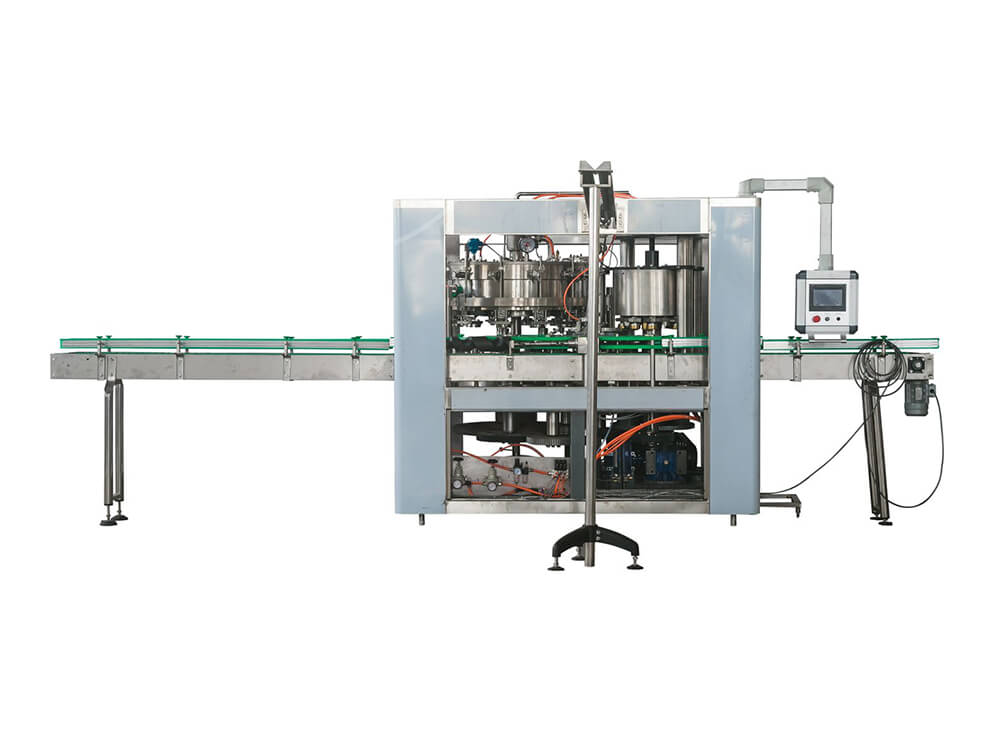
Today's blowing filling capping lines bring together bottle making, liquid filling, and putting on caps all within one machine setup. The monobloc systems basically cut out those extra steps where bottles would normally get moved between different machines. All three main processes happen right there in the same place that keeps things clean from contaminants. Start with a PET preform that gets blown up to its proper shape, then quickly filled with either regular or fizzy drinks, and finally capped while still inside the machine itself. This kind of vertical integration makes the whole operation simpler mechanically by about 30 percent when compared to older methods that required multiple separate machines according to the Packaging Efficiency Report for 2024.
Key Advantages: Space Efficiency, Reduced Contamination Risk, and Higher Throughput
- Space Optimization: Monobloc configurations require 40-50% less floor space than conventional three-machine lines.
- Containment Control: Closed-system processing limits airborne particle exposure, ensuring hygiene compliance for food-grade beverages.
- Throughput Gains: Synchronized automation enables output rates up to 48,000 bottles/hour in high-end models.
| Metric | Monobloc Systems | Traditional Lines |
|---|---|---|
| Floor Space | 40-50% Less | Standard |
| Throughput Capacity | Up to 48,000 bph | 15,000-30,000 bph |
| Changeover Time | <15 minutes | 45-90 minutes |
Case Study: Regional Bottler Solution
A Southeast Asian bottler implemented a compact monobloc line tailored for regional distribution needs. The system delivered:
- 30% reduction in footprint versus legacy equipment
- 99.2% fill accuracy across both carbonated and non-carbonated beverages
- 15-minute format changeovers between 500ml and 1.5L PET containers
This flexibility allowed rapid response to market shifts while maintaining consistent product quality.
Industry Trend: Rising Demand for Compact, High-Efficiency Blowing Filling Capping Lines
The global market for integrated monobloc systems is projected to grow at 12% CAGR through 2027 (Beverage Packaging Trends 2024), driven by:
- Small-to-midsize bottlers seeking multi-product adaptability
- Operators prioritizing energy-efficient systems consuming ≤ 0.5 kW·h/1,000 bottles
- Regulatory mandates for closed-loop hygiene in beverage production
This trend reflects a broader industry shift toward agile, resource-efficient packaging infrastructure.
Counter-Pressure Filling Technology for Carbonated Beverages
Modern blowing filling capping lines use counter-pressure filling to maintain carbonation integrity during high-speed packaging. This method ensures precise, foam-free fills by balancing internal gas pressure before introducing liquid.
Isobaric Filling: Maintaining CO₂ Levels During Carbonated Drink Packaging
Counter pressure systems work by getting bottles ready with carbon dioxide gas at about the same level as what's inside the drink itself, usually around 3 to 4 bars worth of pressure before anything actually gets filled. When this happens, there's much less carbonation lost during the process and significantly less foam forming too, somewhere between cutting it down by half to three quarters when compared with regular atmospheric filling techniques. What makes all this possible? Well, basically there are these four main steps involved: first comes the initial pressurization with gas, then comes the actual pouring of the beverage while keeping everything under control, followed by recovering whatever leftover gas remains after filling, and finally sealing everything up tight so nothing escapes. All these steps together help maintain that great taste we expect from our drinks and also extend how long they stay fresh on store shelves.
High-Precision Filling Under Pressure: Achieving ±1% Accuracy
Servo-regulated valves and pressure-stable chambers enable filling accuracy within ±1% even at speeds exceeding 40,000 bottles/hour. Real-time mass flow meters adjust dynamically for viscosity differences across beverages—from low-carbonation sparkling waters (2.5 vol CO₂) to highly effervescent soft drinks—ensuring consistency without slowing production.
Mechanical vs. Electronic Control in Counter-Pressure Valves: Performance Comparison
| Parameter | Mechanical Valves | Electronic Valves |
|---|---|---|
| Accuracy | ±2% | ±0.8% |
| Maximum Speed | 24,000 BPH | 48,000 BPH |
| CO₂ Savings | 12-15% | 18-22% |
| Maintenance Cycles | 500-700 Hours | 1,500-2,000 Hours |
Electronically controlled valves reduce oxygen ingress by 30% due to millisecond-level response times, enhancing shelf stability despite a 25% higher initial investment.
Cold Fill and Aseptic Options for Non-Carbonated Beverage Compatibility
For dual-capability facilities, modern monoblocs include cold-fill (4-7°C) and UV sterilization modules. These allow swift transitions between product types while maintaining microbial counts at ≤ 10 CFU/ml—critical for acid-sensitive functional waters and flavored seltzers that avoid thermal pasteurization.
Dual-Purpose Flexibility: Running Carbonated and Still Water on One Line
Integrated monobloc systems now support both carbonated and still beverage production through modular design, meeting demand for operational agility among regional bottlers aiming to minimize capital costs.
Designing Versatile Filling Monoblocks: Volumetric vs. Gravity Filling Systems
Advanced lines utilize two primary filling technologies:
| System Type | Carbonated Drinks | Still Water | Accuracy |
|---|---|---|---|
| Volumetric (Pressure) | Required | Optional | ±0.5% variance |
| Gravity Flow | Not Compatible | Standard | ±1.5% variance |
Volumetric filling dominates dual-purpose applications, using counter-pressure to preserve fizz while achieving sub-1% fill variance. Leading manufacturers offer swappable filler heads that enable fast switching between modes without mechanical reconfiguration.
Fast Format Changeover: Switching Between Drink Types in Under 15 Minutes
Automated changeovers now take 12-15 minutes thanks to:
- Quick-clamping filler head assemblies
- Self-adjusting cap feeders
- CIP cycles triggered via HMI recipes
These features minimize downtime, especially valuable for seasonal products and mixed-brand portfolios.
Handling Bottle Variants: Adaptability from 500ml to 2L PET Containers
Servo-driven adjustments manage 87% of common PET container variations through:
- Automatic height calibration (200-320mm range)
- Interchangeable gripper jaws for different neck finishes
- Conveyor track widening up to 140mm
Plants can run 500ml carbonated drinks and 1.5L water bottles concurrently by grouping containers based on base diameter.
Servo-Driven Adjustments and HMI Pre-Sets for Quick Production Transitions
Integrated servo motors execute station-level format changes in under 90 seconds using HMI-stored presets. Operators select a profile from the touchscreen interface, automatically adjusting:
- Filler nozzle heights
- Capping torque (12-25 Nm)
- Conveyor lane spacing
These smart configurations reduce human error by 62% compared to manual setup methods.
Automation and Smart Control in Modern Blowing Filling Capping Lines
PLC and HMI Integration: Enabling Real-Time Monitoring and Diagnostics
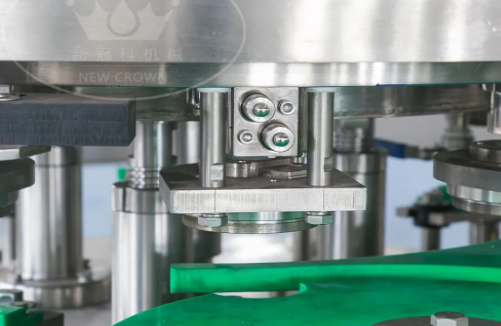
The PLCs and HMIs work together across every part of the blowing, filling, and capping process on these lines. There are something like 150 sensors scattered throughout the system checking things like how full each container gets, how tight the caps are applied, and what kind of pressure builds up during operation. These monitoring systems keep errors really low, usually under about 1% variance. Operators love the touchscreen HMIs because they can see exactly where problems might be happening right away. Most of the time, workers can fix issues as they come up without stopping the whole production line, which saves a ton of downtime. According to Automation World in their 2023 report, this kind of setup has become standard practice in modern manufacturing facilities.
Integrated CIP Systems: Ensuring Hygiene with Minimal Downtime
Automated clean-in-place (CIP) systems cut sanitation time by 40% compared to manual cleaning. According to a 2023 PMMI report, closed-loop filtration enables 98% water reuse, reducing environmental impact. Facilities using integrated CIP experience 15% fewer contamination-related stoppages.
Industry 4.0 Features: Data Logging, Remote Access, and Predictive Maintenance
IoT-enabled devices log more than 500 operational metrics per hour. Remote access allows engineers to diagnose and fix 85% of issues off-site, while AI-powered predictive maintenance reduces unplanned downtime by 30% (Rockwell Automation 2023). These capabilities enhance uptime and support centralized fleet management.
Overcoming Integration Challenges in Complex Beverage Production Facilities
Standardized communication protocols like OPC UA and MTConnect are essential for integrating monobloc lines with existing control systems. A 2024 ISA study found modular machine designs reduce retrofitting costs by 22%, enabling phased automation upgrades in complex, multi-stage plants.
Eco-Friendly Capping: Lightweight Caps and Material Reduction Strategies
Modern blowing filling capping lines incorporate eco-design principles, with 2023 industry data showing an 8-12% reduction in cap material usage since 2020. Innovations such as single-material PET caps and thinner preforms cut plastic consumption by up to 15% (PwC 2023), supporting landfill reduction and compliance with EU Single-Use Plastics Directive targets for 2025.
Energy and Water Savings via Closed-Loop CIP and High-Efficiency Motors
| Sustainability Feature | Performance Metric |
|---|---|
| Closed-loop CIP cycles | Reduces water use by 30% |
| IE4-class motors | Lowers energy consumption by 18% |
| Heat recovery systems | Recaptures 45% of thermal energy |
When combined with direct-drive servo motors, advanced monobloc systems deliver annual energy savings exceeding $85,000 per line (2024 Beverage Industry Report), significantly lowering utility loads.
OPEX Benchmark: 20% Lower Operating Costs in Automated Lines
Automated blowing filling capping lines reduce operating expenses through:
- 40% fewer manual interventions via robotic palletizing
- 25% lower utility costs from smart energy monitoring
- 15% reduced downtime using predictive maintenance algorithms
A 2023 McKinsey analysis of 120 beverage plants confirmed a $0.012 per bottle cost advantage over semi-automated systems, with ROI achieved in under 2.5 years for high-volume operations.
FAQ
What is a monobloc system?
A monobloc system integrates blowing, filling, and capping processes into a single machine setup, reducing the need for bottle transport between separate machines and maintaining contamination control.
What are the advantages of using a monobloc line?
Monobloc lines offer space optimization, limit contamination risks, and increase throughput efficiency, providing high-end models with output rates up to 48,000 bottles per hour.
How do monobloc systems support sustainable practices?
They use eco-design principles like lightweighting caps and reducing material usage. Energy and water savings are achieved via closed-loop CIP cycles and high-efficiency motors.
What technologies are involved in maintaining carbonation in beverages?
Counter-pressure filling technology is used, where carbon dioxide gas is balanced with the pressure inside the drink to reduce carbonation loss and foam formation during filling.
Table of Contents
- The Principle of Integrated Blowing Filling Capping in a Single Monobloc System
- Key Advantages: Space Efficiency, Reduced Contamination Risk, and Higher Throughput
- Case Study: Regional Bottler Solution
- Industry Trend: Rising Demand for Compact, High-Efficiency Blowing Filling Capping Lines
- Counter-Pressure Filling Technology for Carbonated Beverages
- Dual-Purpose Flexibility: Running Carbonated and Still Water on One Line
- Automation and Smart Control in Modern Blowing Filling Capping Lines
- Eco-Friendly Capping: Lightweight Caps and Material Reduction Strategies
- Energy and Water Savings via Closed-Loop CIP and High-Efficiency Motors
- OPEX Benchmark: 20% Lower Operating Costs in Automated Lines
- FAQ