
 EN
EN



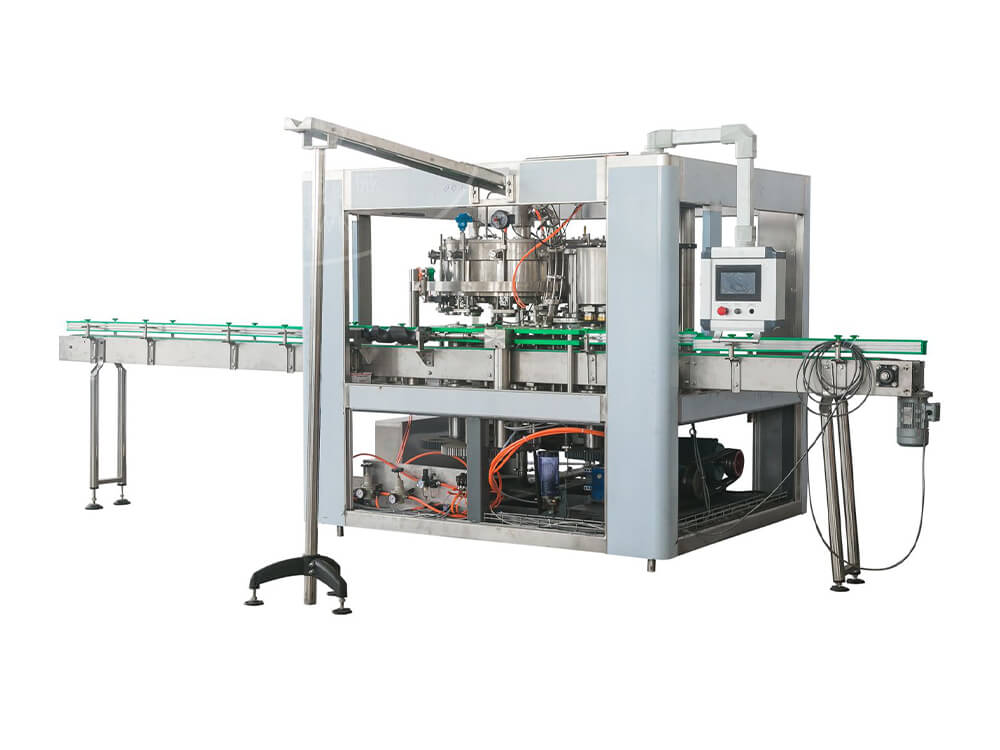
Core Principles of Hygienic Design in Blowing Filling Capping Systems
Smooth, Crevice-Free Surfaces for Optimal Cleanability and Bacterial Control
Juice processing facilities often rely on blowing filling capping systems made with seamless welds and highly polished 316L stainless steel surfaces. These surfaces help prevent those tiny cracks where bad bacteria such as Listeria or E. coli might hide and multiply. According to some recent studies from Food Safety Modernization Act compliance reports back in 2022, this kind of design cuts down on microbial risks by around 72% when compared to equipment with rougher textures. The manufacturers also incorporate rounded edges throughout these machines, along with quick release clamps that make cleaning much easier. During those automatic Clean-in-Place cycles, these design choices really pay off because they minimize how much residue sticks around after each run through the system.
Surface Finish Standards (e.g., Ra 0.8 µm) to Prevent Biofilm Formation
The acid content in fruit juices actually speeds up how quickly bacteria form those stubborn biofilms on rough surfaces. That's why food processing equipment needs to maintain a surface finish no coarser than Ra 0.8 micrometers according to EHEDG standards. This level of smoothness acts as a barrier against bacterial stickiness. When surfaces are polished to look almost like mirrors, it makes cleaning much easier since detergents can reach into every nook and cranny. This matters a lot when dealing with sugary drinks like orange juice or lemonade where both sugar and acid work together to create ideal conditions for microbial growth.
Self-Draining Geometries to Eliminate Stagnant Liquid Zones
Modern designs incorporate sloped surfaces (≥3°) and funnel-shaped transitions that direct liquids toward drainage points, preventing pooling—a contributing factor in 58% of juice contamination incidents (Journal of Food Protection, 2023). Valve seats and filler nozzles utilize gravity-assisted drainage to avoid residual droplets that could harbor microbes.
Design for Rapid and Complete Cleaning: Minimizing Disassembly Needs
Hygienic blowing filling capping units are engineered to minimize manual disassembly. Features like seal-free rotating joints and cantilevered filler arms allow over 95% of sanitation tasks to be completed via automated CIP cycles. This approach cuts downtime by 30–50% compared to legacy systems while maintaining EHEDG-certified hygiene standards.
Material Selection: Corrosion Resistance and Food-Grade Compliance
Stainless Steel AISI 316L for Food Contact Parts: Durability and Safety
When it comes to materials for food contact parts, AISI 316L stainless steel stands out as the go-to choice thanks to its remarkable ability to resist corrosion and meet those important FDA and EHEDG standards. What makes this alloy so special? Well, it contains very little carbon which means no carbide precipitation happens when welding, something that could otherwise weaken the metal structure especially in super acidic juice environments where pH levels can drop down to around 2.5. The composition itself is pretty impressive too, with between 16-18% chromium mixed with 10-12% nickel creating what's called a stable passive oxide layer on the surface. This protective barrier helps fight off pitting damage caused by chloride ions found in citrus fruits and also holds up against harsh cleaning agents used in Continuous Improvement Processes (CIP) across many food processing facilities.
Non-Porous Materials to Resist Juice Acidity and Cleaning Chemicals
Engineered polymers and ultra-smooth metal alloys prevent pore formation where biofilms might develop. These materials withstand prolonged exposure to:
- Juice acids: Citric, malic, and ascorbic acids (pH 2.5–4.5)
- Cleaning agents: Caustic soda (pH 12–14), nitric acid (pH 1–2)
- Temperature swings: From 20°C during filling to 85°C during sterilization
Their durability ensures long-term performance without degradation or leaching.
Ensuring Material Compatibility Across Juice Types and CIP Cycles
Material selection is tailored to specific juice profiles to maintain safety and efficiency:
| Juice Type | Key Compatibility Factor | Material Solution |
|---|---|---|
| Citrus (Orange) | High chloride content | 316L + electropolishing |
| Tropical (Mango) | Enzymatic activity | FDA-grade EPDM seals |
| Carbonated | CO₂ permeability | Multi-layer PET containers |
This targeted approach prevents metallic ion leaching (within FDA’s >0.1 mg/kg limit) and supports more than 5,000 CIP cycles without loss of performance.
Clean-in-Place (CIP) Integration for Continuous Hygiene
Modern blowing filling capping systems maintain food-grade hygiene through integrated Clean-in-Place (CIP) protocols that eliminate the need for manual disassembly. Programmable cleaning sequences are built into the equipment, enabling strict contamination control between batches while reducing operational downtime.
How CIP systems maintain hygiene without disassembling the blowing filling capping unit
CIP technology circulates heated cleaning solutions through sealed pathways using a multi-stage process:
- Pre-rinse removes particulate matter from filling nozzles and capping heads
- Alkaline wash (60–80°C) breaks down sugar residues and organic buildup
- Acid cycle dissolves mineral deposits from fruit concentrates
- Final sanitization with purified water leaves no chemical residue
Spray-ball systems provide 360° coverage, reaching internal areas such as blow-mold cavities and valve seats. This closed-loop method reduces human contact by 92% compared to manual cleaning (Food Safety Magazine, 2023).
Designing for full CIP coverage: overcoming dead legs and shadow zones
Effective CIP requires eliminating stagnant areas where contaminants can persist. Key design elements include:
- Minimum 15° slopes on all product-contact surfaces for complete drainage
- Radii ≥3mm at welded joints to prevent biofilm entrapment
- Tri-clamp fittings with sanitary gaskets replacing threaded connections
Filling chambers now use domed lids instead of flat ones, allowing unimpeded flow of cleaning fluids. These improvements reduce cleaning cycle times by 40% and achieve a 99.9% bacterial reduction rate in validation testing.
Automation and Sealed Processing for Contamination Control
Reducing human intervention through automated blowing, filling, and capping
When it comes to juice production, automated blowing filling capping systems cut down on human contact quite a bit, which takes away one big reason why contamination happens. The machines handle things like making containers, measuring out the liquid, and putting on caps in ways that keep hygiene levels pretty much the same every time. Take torque control in those capping machines for example. These systems stop bottles from being either too loose or too tight, something workers often get wrong when doing it manually. That matters because if seals aren't right, bacteria can sneak in. According to reports from food safety organizations, facilities that switched to full automation saw their microbial problems drop around 60% compared to what they had with older semi-automatic equipment. Some plants even report better shelf life for their products since implementing these modern systems.
Sealed environments to protect juice integrity from external contaminants
Modern processing systems work in sealed environments where the air quality meets ISO Class 5 standards, keeping dust and other airborne stuff out. The important parts like filler nozzles and those cap feeders are made from shiny stainless steel, all properly welded together so nothing can get into the system. Inside these chambers, there's always positive air pressure pushing against any dirt trying to sneak in from outside. Temperature control is another big factor here since it helps keep juices stable during processing. All this setup isn't just good practice either—it actually follows the FDA 21 CFR Part 120 guidelines specifically designed for handling low acid food products safely.
Integrated Line Efficiency: Synchronizing Filling with Capping and Packaging
Matching Filling Methods to Juice Characteristics: Pulp Content, Viscosity, Carbonation
The design of filling heads must account for different juice characteristics during production. Juices with lots of pulp need bigger openings and slower pouring speeds so nothing gets clogged up in the system. Smoothies and other thick liquids work better with piston based filling mechanisms since they maintain steady flow throughout the process. For carbonated drinks, everything happens under pressure to keep those bubbles intact. When containers are sealed correctly, oxygen stays low enough in the final product usually around 0.1 parts per million which helps preserve taste and quality over time on store shelves.
End-to-End Integration for Seamless Operation in Modern Juice Production Lines
When blowing, filling and capping operations are integrated through central PLC control systems, production lines see significant time savings between stages, typically cutting wait times by around 30 to 45 seconds for each batch processed. The system continuously monitors container characteristics during the blow molding phase and makes real time adjustments to capping torque within a tight range of plus or minus 0.2 Newton meters when it detects changes in wall thickness. Manufacturers report that this level of integration can improve Overall Equipment Effectiveness by approximately 18 to 25 percent over traditional separate machines. Automated inspection systems also catch problematic containers, discarding those where liquid levels deviate more than 1.5 milliliters from standard specifications. These improvements represent substantial gains in both productivity and product consistency across manufacturing facilities.
Case Study: Integrated Solutions for High-Variability Juice Formats
A leading manufacturer’s hygienic blowing filling capping system achieved a 98.7% first-pass yield across 14 juice types—from NFC orange juice to probiotic smoothies—by incorporating:
- CIP-optimized flow paths enabling flavor changeovers in just 12 minutes
- Modular capping heads compatible with twist-off, snap, and tethered closures
- Predictive maintenance algorithms that reduced unplanned downtime by 37% over 18 months
This configuration illustrates how synchronized, hygienic design maintains food safety while supporting flexible, multi-SKU production demands.
FAQ
What is the purpose of using 316L stainless steel in blowing filling capping systems?
316L stainless steel is used for its corrosion resistance, durability, and ability to meet FDA and EHEDG standards. It creates a stable passive oxide layer that protects against damage from acidic juices and harsh cleaning agents.
How do Clean-in-Place (CIP) systems maintain hygiene without manual disassembly?
CIP systems circulate heated cleaning solutions through sealed pathways, removing contaminants through a multi-stage process including pre-rinse, alkaline wash, acid cycle, and final sanitization. This method minimizes human contact and ensures thorough cleaning.
Why are self-draining geometries important in hygienic design?
Self-draining geometries, such as sloped surfaces and funnel-shaped transitions, prevent pooling of liquids, which can contribute to contamination by harboring bacteria.
How does automation improve hygiene in juice production?
Automation reduces human contact during production, which minimizes contamination risks. Automated systems also ensure consistent hygiene levels by precisely controlling processes such as sealing and torque.
Table of Contents
- Core Principles of Hygienic Design in Blowing Filling Capping Systems
- Material Selection: Corrosion Resistance and Food-Grade Compliance
- Clean-in-Place (CIP) Integration for Continuous Hygiene
- Automation and Sealed Processing for Contamination Control
- Integrated Line Efficiency: Synchronizing Filling with Capping and Packaging
- FAQ